

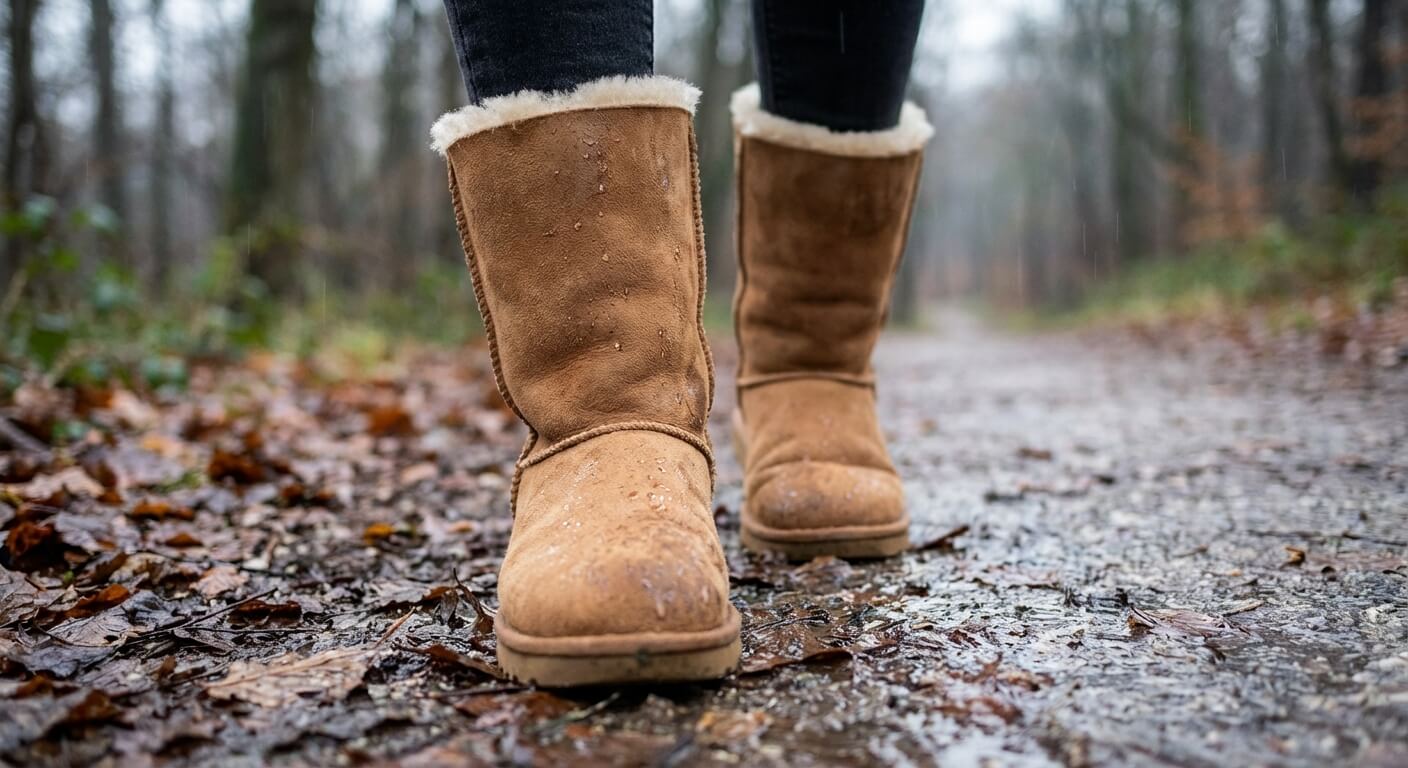
UGG boots are known for their warmth, softness, and relaxed fit, which is exactly why many people wear them daily through winter. That same natural comfort, however, often leads to one big question: what actually happens if UGG boots get wet or are washed?
The short answer is yes, UGG boots can shrink, stiffen, or lose their original shape if they absorb too much water or dry too quickly. The longer answer is more useful — and far more reassuring — once you understand how sheepskin behaves and how small care choices affect long-term wear.
This guide explains why shrinkage happens, what really causes damage, and how to clean and dry UGG boots safely without shortening their lifespan. The advice stays intentionally general so it applies to most genuine sheepskin boots and slippers.
Why UGG Boots React Differently to Water
UGG boots are made from natural sheepskin, which combines a suede outer layer with wool fibres on the inside. These fibres behave much like wool clothing. When exposed to water, they swell. When dried too quickly or with heat, they contract.
This natural movement is the main reason boots can feel tighter, stiffer, or slightly smaller after washing. Unlike synthetic footwear, sheepskin does not stay dimensionally stable when soaked.
Research into wool fibres shows that shrinkage occurs when moisture and agitation cause fibres to interlock more tightly — a process often referred to as felting. This is the same reason wool jumpers can shrink in a hot wash.
- Wool fibres expand when wet and contract as they dry
- Heat accelerates fibre tightening
- Agitation increases fibre interlocking
UGG boots experience the same physical process when washed or soaked.

Can UGG Boots Shrink From Rain or Snow?
Light moisture usually does not cause immediate damage. Walking through damp grass, light rain, or surface moisture on cold mornings rarely leads to noticeable shrinkage, especially if the boots dry slowly and naturally.
Problems arise when boots become saturated or remain wet for extended periods. Deep puddles, heavy rain, or soaking the boots during cleaning increases the risk of the fibres tightening as they dry.
If your boots get wet during normal wear, the way they are dried matters far more than the water itself.
What Happens If You Wash UGG Boots?
Washing is where most damage occurs, particularly when machines are involved. Washing machines introduce three risk factors at once: prolonged soaking, constant movement, and temperature changes.
Even cold cycles labelled as gentle can still create fibre stress inside the boot. Tumble dryers add direct heat, which rapidly tightens wool fibres and can permanently alter the boot’s shape.
Studies on wool textiles indicate that heat combined with moisture can reduce fibre elasticity by more than 20 percent. In footwear, that loss of flexibility often feels like stiffness or tightness after drying.
- Machine agitation increases internal fibre compression
- Heat speeds up shrinkage reactions
- Extended soaking weakens suede structure
Do All UGG Boots Shrink the Same Way?
Not all boots respond identically. Fit changes depend on how saturated the boot becomes, how it dries, and how often it has already been worn.
Well-worn boots sometimes recover slightly after minor shrinkage because the wool lining has already compressed over time. Newer pairs tend to show more noticeable changes if washed improperly.
Sole materials also matter. While the sole itself does not usually shrink, moisture can weaken adhesives over time if boots are repeatedly soaked.
How to Clean UGG Boots Without Causing Shrinkage
Cleaning does not need to involve soaking. In fact, spot cleaning is usually enough for most everyday wear.
The safest method uses minimal moisture and gentle handling. A damp sponge, cold water, and a cleaner formulated for sheepskin help lift surface dirt without saturating the fibres.
Patience matters here. Rushing the process often causes more harm than the dirt itself.
Simple Cleaning Steps That Reduce Risk
- Lightly dampen the surface rather than soaking
- Use cold water only
- Apply cleaner sparingly with a sponge or cloth
- Blot excess moisture instead of rubbing

Drying UGG Boots the Right Way
Drying is where most shrinkage occurs. The goal is slow, even evaporation without heat.
Boots should dry in a shaded, well-ventilated area at room temperature. Stuffing them with paper towels or clean cloth helps absorb moisture while supporting the boot’s shape.
Direct sunlight, heaters, fireplaces, and dryers all speed up fibre contraction and should be avoided.
Drying Mistakes That Cause Damage
- Placing boots near heaters or radiators
- Using hair dryers or tumble dryers
- Leaving boots in direct sun
If UGG Boots Shrink, Can They Stretch Back?
Minor tightening often relaxes again with wear, particularly if the boots were already broken in. The wool lining gradually compresses under body weight and warmth, which can restore some internal space.
Severe shrinkage is harder to reverse. When fibres tighten too much, the change becomes structural rather than temporary.
This is why prevention matters far more than attempting fixes later.
What About Long-Term Wear and Sustainability?
Many people keep the same pair of UGG boots for years, wearing them almost daily through cold seasons. Over time, signs of wear are expected — flattening wool, softening suede, and cosmetic marks.
From a sustainability perspective, extending the usable life of footwear often comes down to care habits rather than appearance. Gentle cleaning, proper drying, and avoiding unnecessary washing reduce material stress.
Studies on footwear longevity suggest that reducing full washes can extend product lifespan by up to 30 percent, particularly for natural materials.
- Less frequent washing reduces fibre fatigue
- Air drying maintains flexibility
- Spot cleaning preserves structure
Questions Readers Often Wonder About Next
While learning about shrinkage, many readers also start asking related questions that affect fit and comfort.
- Do UGG boots loosen again after feeling tight?
- Can cleaning cause soles to break down over time?
- Is it safer to clean the inside or outside first?
Common Myths About Washing UGG Boots
One common belief is that using a washing machine without a central agitator makes cleaning safe. While top-loaders without agitators reduce friction, they still expose boots to prolonged water exposure and spinning forces.
Another myth is that cold delicate cycles prevent shrinkage entirely. Temperature helps, but agitation and soaking still affect fibre structure.
Hand cleaning remains the lowest-risk option across all boot styles.
A Practical Takeaway for Everyday Owners
UGG boots are not fragile, but they do respond to care choices. Treating them like natural wool rather than synthetic shoes helps set realistic expectations.
If your boots get dirty, clean only what needs attention. If they get wet, dry them slowly. Avoid shortcuts that introduce heat or heavy movement.
Most shrinkage issues are preventable with simple habits that take little extra time.
Key Points to Remember About Shrinkage and Care
- UGG boots can shrink if soaked or dried with heat
- Machine washing increases the risk significantly
- Hand cleaning with minimal water is safer
- Slow air drying helps maintain original shape
- Minor tightening often relaxes again with wear
Understanding how sheepskin behaves allows you to clean and wear UGG boots with confidence, without worrying that one wrong step will shorten their life.