

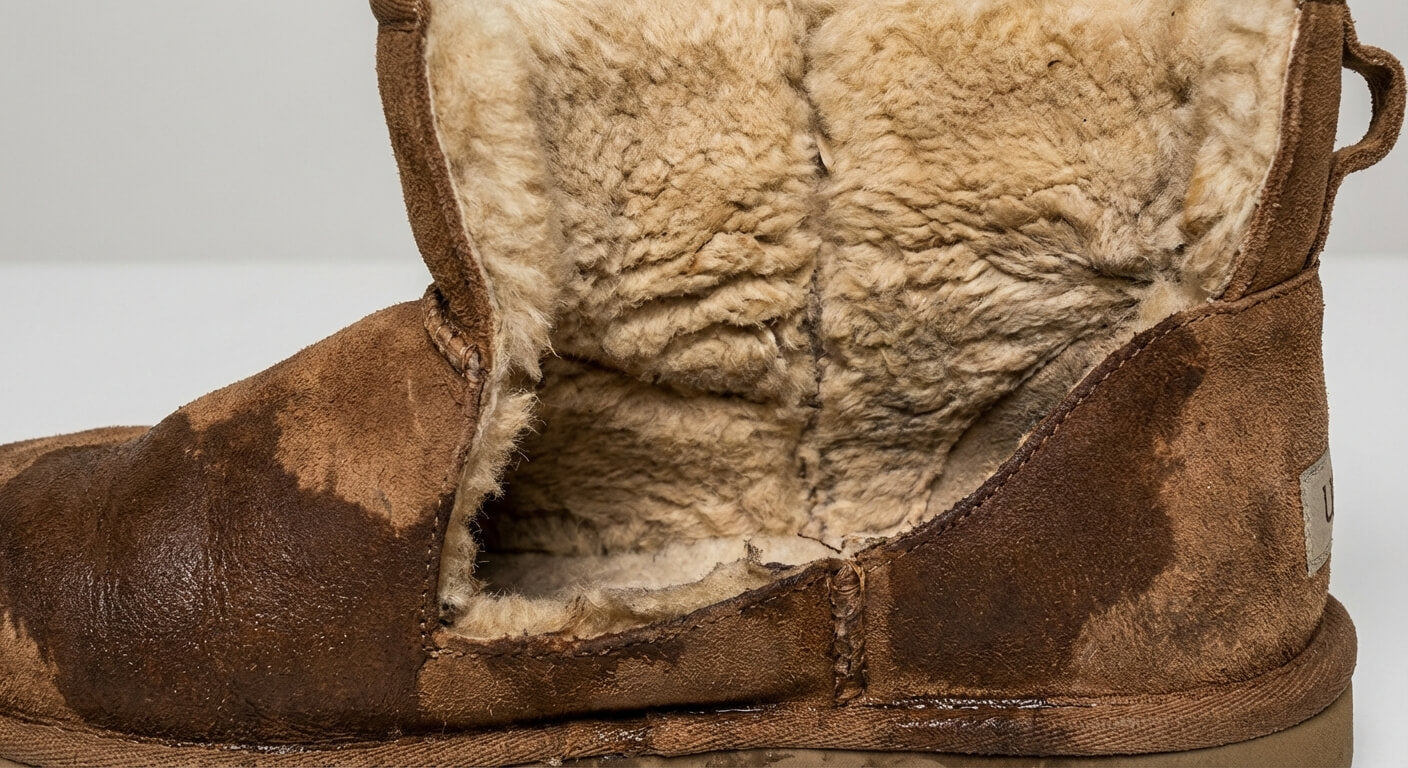
UGG boots are built for warmth, softness, and everyday comfort, not for stormy weather. Still, plenty of people find themselves caught in unexpected rain and wonder whether a single wet outing has permanently damaged their boots.
The reality sits somewhere between “completely fine” and “totally ruined.” Classic UGG boots are not waterproof, but that does not mean light rain will automatically destroy them. Understanding how sheepskin responds to moisture makes all the difference.
This article explains what happens when UGG boots get wet, how much rain is too much, how to dry them safely, and how to reduce water-related wear over time. The guidance stays broad and material-focused so it applies to most genuine sheepskin UGG boots.
What UGG Boots Are Made From and Why It Matters
Traditional UGG boots are made from twin-faced sheepskin. The outer surface is suede, while the inside is lined with dense wool fibres. Both layers come from the same hide, which gives UGG boots their signature warmth and breathability.
This natural construction is also why water exposure needs to be handled carefully. Suede is porous, meaning it absorbs moisture easily. Wool fibres react to water by swelling, then tightening again as they dry.
Unlike sealed leather or synthetic footwear, classic UGG boots are not designed to block water from entering the material.
Is Light Rain Actually a Problem for UGG Boots?
Light rain, mist, or a short walk through damp conditions usually does not cause serious damage, especially if the boots dry properly afterwards. Many people wear UGG boots in mild winter drizzle without noticeable issues.
Problems tend to appear when:
- The suede becomes fully soaked
- Water reaches the wool lining
- The boots stay wet for extended periods
- Heat is used to speed up drying
The longer moisture sits in the material, the higher the chance of visible marks or texture changes.

What Happens Inside the Boot When It Gets Wet?
When UGG boots absorb water, the suede darkens temporarily as moisture spreads through the fibres. At the same time, the wool lining inside begins to compress.
As the boot dries, several things can happen:
- Uneven drying may leave tide marks on the suede
- Fibres can dry stiff if moisture escapes too quickly
- The boot may feel firmer than before
- The wool lining can flatten slightly
These effects are not always permanent, but poor drying habits make them more likely.
How Long Should Wet UGG Boots Take to Dry?
Drying time varies based on humidity, airflow, and how wet the boots became. In most indoor environments, natural air drying takes between one and two days.
Footwear care research consistently shows that natural materials hold their shape better when dried slowly. Rapid heat exposure increases the risk of fibre tightening and surface stiffness.
- Air drying protects suede texture
- Gentle airflow prevents hard water lines
- Patience helps boots regain flexibility

What To Do If You Get Caught in the Rain Wearing UGG Boots
If your boots get wet, your response in the first hour matters more than the rain itself.
Immediate Steps After Rain Exposure
- Gently blot moisture with a dry cloth
- Stuff the boots with plain paper to support shape
- Place them in a cool, ventilated area
- Allow them to dry naturally
Avoid radiators, heaters, fireplaces, or hairdryers. Once fully dry, a suede brush can help lift the nap and even out the surface.
Why Heat Causes Long-Term Damage
Heat feels like a practical shortcut, but it is one of the most common causes of ruined UGG boots. When wet suede and wool are exposed to heat, fibres contract too quickly.
This reaction explains why boots can feel stiff or smaller after being dried near heaters. Slow evaporation allows fibres to relax and return closer to their original state.
Does Water-Resistant Spray Help?
Applying a suede water-repellent spray adds a protective layer that helps water bead on the surface rather than soaking in immediately. While this does not make boots waterproof, it reduces staining from light rain.
Protective sprays are most effective when:
- Applied before the first wear
- Used on clean, dry suede
- Reapplied periodically during wet seasons
Think of spray as a buffer, not a guarantee.
Are Some UGG Boots Designed for Wet Weather?
Some UGG boot styles include treated suede, sealed seams, or water-resistant linings. These designs behave differently from classic sheepskin boots and tolerate wet conditions more comfortably.
If rain is a regular part of your routine, choosing a weather-ready style reduces the need for constant maintenance.
Questions Readers Often Look Up Next
Once people understand how rain affects UGG boots, a few follow-up questions tend to come up repeatedly:
- Do UGG boots shrink if they dry the wrong way?
- Can water stains be removed from suede?
- Is it safe to wear UGG boots during winter showers?
These concerns usually come down to drying technique and how deeply moisture penetrated the material.
How Often Does Rain Permanently Damage UGG Boots?
Most long-term damage comes from repeated wetting rather than a single rainy walk. Boots that get wet occasionally and dry properly usually recover well.
General footwear care data suggests:
- A majority of suede damage occurs during drying, not rain exposure
- Improper heat drying increases stiffness complaints significantly
- Preventive care noticeably slows visible wear
When Is It Better Not to Wear UGG Boots?
There are times when UGG boots simply are not the practical choice.
- Heavy or prolonged rainfall
- Walking through puddles or muddy areas
- Outdoor activities lasting several hours
UGG boots perform best in dry, cool conditions where comfort is the priority.
Key Points to Remember
- Classic UGG boots are not waterproof
- Light rain is usually manageable
- Heavy soaking increases staining risk
- Natural air drying protects materials
- Protective spray adds an extra layer of defence
Knowing how sheepskin reacts to water allows you to wear UGG boots with confidence and care. With sensible use and proper drying, occasional rain does not have to shorten their lifespan.